Showing posts with label Olivier. Show all posts

Friday, March 23, 2012

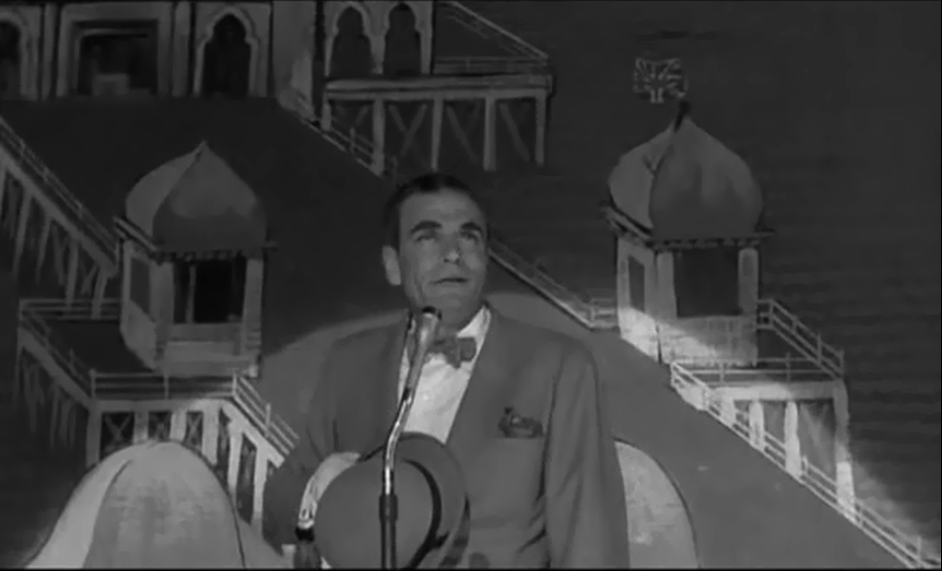
The Entertainer (1960)

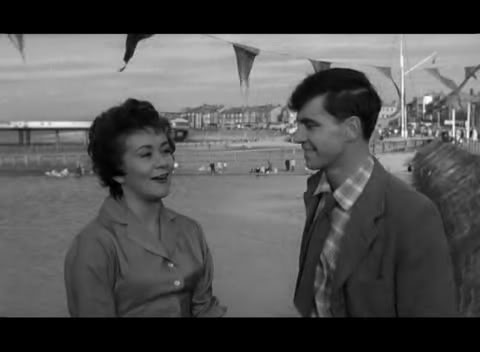
The Entertainer is classified as a "kitchen sink" drama. A specialized form of movie-making that the British excelled at in the late 50's and early 60's. Giving the viewer a look into the sometimes mundane and negatively fueled lives of the working class Briton, these dramas provide a heavy dose of realism. I'm very drawn to these types of films, namely because of two actors that actually made their film debut in The Entertainer, Alan Bates and Albert Finney. Though mostly negative in nature, usually with an angry young man or sullen girl at the forefront, they bring a refreshing break from most of the classic film made up to that time. Most especially anything made in the Hollywood dream factory.

The Entertainer is no exception in it's bleak outcome, however, I found it quite worth the watch as Laurence Olivier really outdoes himself as Archie Rice a tired, old vaudevillian actor struggling to create his ultimate dream show amidst family turmoil and his inability to make all the ends meet. Plagued by debt, an emotional gin-swilling wife, a father who still outshines him in fame and a selfishness that consumes and destroys almost everyone he meets, Archie Rice should be hated. Yet, Olivier manages to keep a warm element of humanity at the forefront of his Archie character. Despite his deadened eyes and his abnormal reactions to such events as his youngest son's death, there is a humor and helplessness in his demeanor that allows you to relate to him on an emotional level. Because of this, you understand why his family sticks by him no matter how bad he gets.
The best scene in the movie would rival any Shakespearean soliloquy Olivier gave in his career. When almost all has failed him and he faces certain ruin, he admits to his daughter Jean (Joan Plowright) that he's dead inside and has been for quite some time. The only thing he knows and finds acceptable to do is keep on keeping on.


Tonight on TCM!
Get your Bronte sisters on!

Friday, September 23, 2011

The Prince and the Showgirl (1957)


Based on Terence Rattigan's play The Sleeping Prince, the story takes place in London in 1911 during the coronation of King George V. Grandduke Charles, the Rrince-Regent of Carpatha (Laurence Olivier) has arrived for the ceremonies with his son King Nicholas (Jeremy Spenser) and mother-in-law the Queen Dowager (Sybil Thorndike). Quite the playboy, Charles sets his sights on Elsie (Marilyn Monroe) a showgirl currently performing at the Coconut Club and depends upon Northbrook (Richard Wattis), his attaché from the British Foreign Office, to arrange a private dinner for them. Though Elsie is excited to be invited to what she thinks is a formal dinner, she puts her foot down when she realizes the dinner will be on a more tête-à-tête basis. Having dealt with this kind of issue before, she makes an agreement with Northbrook, who is nervous about displeasing The Regent, that she will stay for a short time before he will break into the dinner with an “emergency”. What Elsie didn’t count on was the vodka and champagne combination. After initially being ignored by Charles, who is a stickler for protocol and has business to attend to, he returns his attention to Elsie who has gotten quite tipsy. Trying his best romantic maneuvers, Elsie laughs him off, calling his game quite dull. Enraged, he sets about getting a car ready to take her home but when she leaves the room to get her wrap, he amps up the romantic atmosphere and Elsie (quite literally) falls for him. Slightly disgusted she has passed out from the vodka consumption, Elsie is put into a guest room and Charles goes to bed. The next day he is upset to find Elsie, who is now madly in love with him, still there. Through a series of events, she manages to stay with him the entire day, getting to attend the coronation and the ball afterwards. In that time Elsie manages to find out the true relationship between father and son, brook the gap between them and made the stuffiest of Regents fall in love with her.


I don’t think it needs repeating that this was a strange pairing of actors. Monroe, who now had her own production company and enough star power to choose who she wanted to work with, was interested in becoming a more serious actor. Teaming up with Olivier, Britain’s premiere Shakespearean and otherwise actor was definitely aiming for the apex. Though her part in The Prince and the Showgirl wasn’t quite dramatic, she certainly didn’t play an airhead either. Managing to disconcert The Regent in a most innocent way, the viewer can’t but wonder if she’s hiding some real intelligence behind those wide eyes of her. In the end, she has everyone eating out of her hand- a simple showgirl prone to wardrobe malfunctions. Though Olivier played the part of the stuffy regent to perfection and Thorndike was a delight as the hard-of-hearing Dowager, I was most impressed with Monroe’s performance. This was another scenario where her behavior on set was quite deplorable (something that My Week with Marilyn will apparently go into more detail about- Kenneth Branagh is to play Olivier- swoon!). Despite that and the struggles she had with Olivier who was directing the film and who had no tolerance for any of her nonsense, he got a very fine performance out of her. Looking at the movie, you wouldn’t know she was seriously intimidated by Olivier, so much so, she often wouldn’t arrive on set for days, once even leaving the elderly Thorndike waiting for hours in costume for her arrival.


Tonight on TCM!
Go treasure hunting!

Tuesday, September 20, 2011

TCM Tuesdays in September: Kirk Douglas: The Devil's Disciple (1959)

At the onset of the American Revolution, the British Army, who are trying to make their way to New England, decide to hang anyone suspected of being a rebel. Their most recent victim is Tim Dudgeon who Reverend Anthony Anderson (Burt Lancaster), his pastor, tries to save. Unfortunately, he arrives too late to tell the British that Dudgeon is innocent. Anderson then tries to take the body but is informed that Dudgeon must hang as a reminder to the rebels. Anderson is adamant and almost arrested himself until some noted townspeople vouch for him. Later that night, Anderson is visited by Dick Dudgeon (Kirk Douglas), Dudgeon’s oldest son and the black sheep of the family. He has daringly stolen his father’s body from under the British Army’s nose and delivers it to Anderson. Despite Dudgeon's open rejection of Christianity, he asks Anderson to give his father a proper burial.
Later, when the British find the grave, they assume Anderson stole the body and set out to arrest him.  Anderson, who urged Dudgeon to come to his home so they could speak about the danger he is in, has been called away. Dudgeon’s mother is suspected of being on her deathbed and Anderson must be by her side. Dudgeon is left alone with Anderson’s wife Judith (Janette Scott), who is openly hateful of him. Thinking him a selfish adventurer, she must nonetheless entertain him so she does not upset her husband. When the British come for the arrest, Dudgeon pretends to be Anderson, much to his and Judith’s bewilderment. He warns Judith privately that she must not try and save him for her husband would be put to death either way.
Judith goes to inform her husband of what has taken place, urging him to save Dudgeon. When he runs off, she mistakenly thinks he does so to save himself. While Anderson tries to gather forces, he comes across true rebels and joins them in conquering the troops stationed in a nearby town. Judith races off to the prison and devotes herself to Dudgeon. While Dudgeon is on trial, Anderson receives an important missive stating that the relief troops the British so desperately need are not available. He takes this message to General Burgoyne (Lawrence Olivier), who is at the trial of Dudgeon and uses the information to save Dudgeon’s life.

Though it did not get great reviews on it’s release and is not really historically correct, I found The Devil’s Disciple mildly entertaining. Douglas is fabulous in the film (the man knew how to play a charming rogue), and Lancaster livens up his boring part in the battle scene, but it’s Olivier (third billed) that steals the show. Elegant, disillusioned, highly intelligent and quite cynical, he is the perfect, if a bit ironic, mouthpiece to deliver Bernard Shaw's cutting barbs about the British's shortcomings. There is also an ingenious and slightly quirky use of puppets to assist in the narration of the story that's very interesting.

Trivia:
Apparently Sir Laurence Olivier was willing to be third billed as he was trying to get funding to put on his screen version of Macbeth. Unfortunately, during this filming, Vivien Leigh was having a mental breakdown. Later, Olivier would state that this affected his performance immensely, ironic since he acted beautifully, due to his worry over her. It’s also rumored that he was bitter over the fact that Lancaster and Douglas’ production companies were able to get funding to film a British playwright’s work, while he was not.

Though Lancaster’s production company helped land the Shaw play, their history of going over-budget meant that the huge color extravaganza, typical of films from that era, was vetoed. Yet, the puppets got in! Also, Lancaster, though top billed, was relegated to playing the part of the pious Anderson because Douglas was riding high off his recent film successes. This was the third film out of seven that they did together.


Tonight on TCM!
Another Tuesday full of Douglas! I'm gonna watch Paths Of Glory and Lust For Life!

Monday, May 16, 2011

Bunny Lake is Missing (1965)

American single mother Ann Lake (Carol Lynley) has come to England with plans to settle in London with her journalist brother Steven (Keir Dullea) and her four-year-old daughter Felicia, whom she calls Bunny.. Late on Bunny’s first day of school and needing to get ome to meet the movers, Ann leaves Bunny in the “first day” room while she tries to find a teacher. She comes across the very busy cook (Lucie Mannheim) who says she will look after her. However, when Ann comes to fetch Bunny later that day she is not there and nobody can remember having seen her. The cook quit earlier that day.


Police Superintendent Newhouse (Laurence Olivier) has a small list of suspects to check out in Bunny's disappearance: the cook whom quit the school earlier that day, Ann's landlord, aging writer and broadcaster Horatio Wilson (Noel Coward), and retired teacher Ada Ford (Martita Hunt) wholives on the school's top floor and collects recordings of children's nightmares.
The investigation becomes more suspicious when all of Bunny’s possessions have disappeared, including her passport and the school has no record of her registration despite Steven’s check registrar showing he wrote a check to the school two weeks prior. Further, Ada tells Newhouse that Steven confided in her that Ann used to have an imaginary friend she called Bunny and that he was worried about her. Ann is having a hard time proving that Bunny even exists and Steven is threatening to go public with the help of his resources as a reporter unless the police find Bunny quickly.


Already handing over a gift she bought Bunny earlier that day as proof she isn’t lying about her daughter’s existence, Ann suddenly recalls that her doll had been taken in for repair. She sets off to the shop and finds the doll but  when Steven arrives he sets it on fire while Ann is upstairs paying the repair man. When Ann returns she is shocked and Steven then strikes her, knocking her out. He checks her into a hospital, claiming she hit her head and that she may be mentally unstable, but Ann manages to escape and tracks him down to the friend’s house they were staying at prior to their move to the flat.


Steven retrieves Bunny from the trunk of his car, where she was drugged and kept all day. Preparing to murder Bunny and bury her with all her posessions, Ann sees that he’s clearly insane. Stating he’s tired of Bunny always coming between them and that she loves her more than he, Steven confides how easy it was to trick her and the police. Ann spends the next hour trying to distract and reassure Steven by playing frantic children games out in the yard until Newhouse and his men arrive.

This was a wonderful film that kept me guessing throughout as to whether or not Ann or Steven was crazy. Their relationship with one another was certainly questionable as you're lead to believe they are husband and wife in the beginning of the film. Indeed, if you hadn't been told they were siblings, you'd still think by their behavior that something more than platonic was between them. The best part of the film however, was Noel Coward's bit part as the perverse landlord with a penchant for sadomasochism. I could honestly listen to him talk like Horatio Wilson all day.
 I am currently reading Donald Spoto's Laurence Olivier: A Biography which is part of the reason I wanted to see this film- that and I was interested in seeing Raymond Massey's daughter in action. Laurence participated in this film, like in most of his films as a source to replenish his bank account. He also relished the opportunity to work with his long-time friend Noel Coward. However, he found the director Otto Preminger quite a bully and egotist. Both he and Coward did not like him much.

Tonight on TCM:
Ocean's Eleven (1960) A group of friends plot to rob a Las Vegas casino. Dir: Lewis Milestone Cast: Peter Lawford, Dean Martin, Frank Sinatra.

Tuesday, October 20, 2009

Thursday, August 13, 2009

Smokin'!

The hardest part about watching classic cinema is that it makes me wanna smoke. With as much as the stars smoked, you'd think developing a habit was prerequisite to being a film star. In a report that was discovered in 2008, researchers found just such evidence that supports smoking in movies as a neccessary artistic devise. Contracts were found between big tobacco companies, Hollywood movie studios and stars who endorsed certain brands of cigarettes. For instance movie stars who endorsed Lucky Strikes cigarettes in 1937 were paid $218,750, the equivalent to $3 million in today’s dollar amount! And all the big stars were in on it, Joan Crawford, Gary Cooper, John Wayne and on and on. The advertisements were the end product of a commercial/PR endeavor for the tobacco industry that proved, like the tobacco itself, quite addictive and profitable.


Tonight on TCM!

Summer Under the Stars: Gloria Grahame